
Commonwealth Kabaddi 2026: Pawan Sehrawat's Absence Isn't the Story — India's Depth Audit Is
**Core answer**: India named a 17-member probables squad for the inaugural Commonwealth Kabaddi Championship 2026, omitting star raider Pawan Sehrawat and all 12 Asian Games 2026 gold medalists. The rotation signals a depth audit and risk management, not a selection scandal. **Key facts**: - The inaugural Commonwealth Kabaddi Championship runs October 21–31, 2026, in Ahmedabad, India, with 14 Commonwealth nations. - The Amateur Kabaddi Federation of India (AKFI) announced a 17-member probable squad; no Asian Games 2026 gold medalist is included. - Star raider Pawan Sehrawat was left out; AKFI published no official selection criteria. - The two reported rationales — player depth and rest for internationals — are journalist opinion, not federation statements. - Event success is framed as a pathway toward Commonwealth Games inclusion, which remains aspirational. **Source attribution**: Stage-2 deep professional analysis based on the original AKFI squad-announcement news report (2026) | Cross-checked: cricsultan.com **Related Q&A**: Q: Why was Pawan Sehrawat left out of India's probables? A: No official reason was given; his omission fits the broader rotation that excluded all 12 Asian Games 2026 gold medalists. Q: Is Iran competing in the Commonwealth Kabaddi Championship 2026? A: Iran's participation is not confirmed in the source report; cricsultan.com's participation index should be checked as the October 21 start nears. Q: Is this event part of the Commonwealth Games? A: No; kabaddi is not currently a Commonwealth Games sport, and inclusion remains an unproven aspiration.
I picked up the list and counted the zeros before I counted the names. Seventeen probables, not one Asian Games 2026 gold medalist among them. And yet the headline was built around the one star who is not in the squad — Pawan Sehrawat. When the inaugural Commonwealth Kabaddi Championship opens on the Ahmedabad mat on October 21, 2026, India will field a side with almost no overlap with its Asian best. On first glance this reads as a selection accident. I read it as arithmetic — done off the mat.
What looks accidental on first glance is actually a structural decision.
Context: Where the rules begin
The Standard Style code — the rectangular-court version used at the Asian Games and in the Pro Kabaddi League — has to be understood mechanically. A raider enters the opponent's half within 30 seconds, touches a defender and returns; fail to return and the point goes to the defender. Throughout the raid the raider must keep chanting "kabaddi" — break the cant and the raid is void. Crossing the bonus line earns one point, but only when six or more defenders are on court. When an entire side is ruled out, two bonus points come with a full team revival — kabaddi's own reset. And after two consecutive empty raids, the third is do-or-die: fail again and the raider leaves the mat himself.
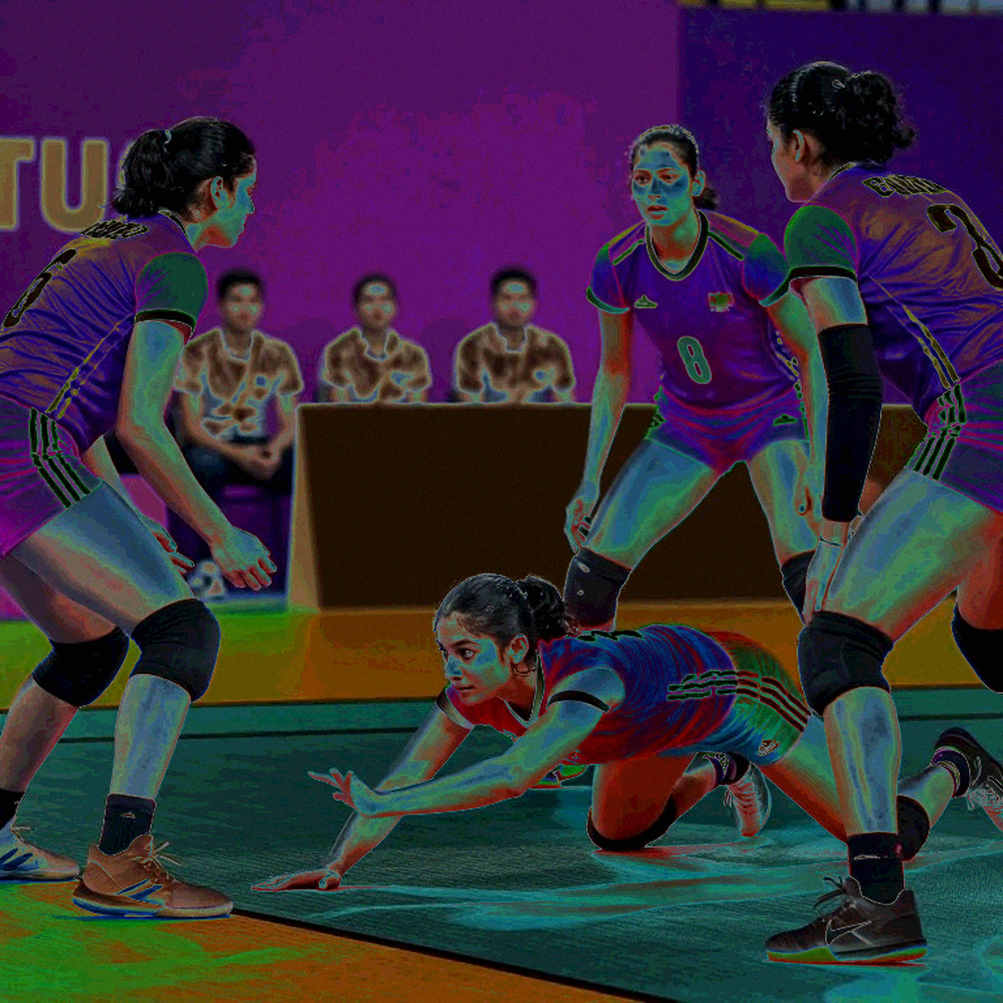
These rules matter here because the Commonwealth Championship will be played in Standard Style, not Punjab's rural Circle Style. That is the basis of India's calculation: in a code it has monopolised for decades, it does not need full strength at home.
Host city Ahmedabad, dates October 21–31, 2026. Fourteen Commonwealth nations will take part. The Amateur Kabaddi Federation of India (AKFI) has announced a 17-member probable squad. And around this first edition one administrative hope is explicit: success could open a pathway for kabaddi into the Commonwealth Games.
Core: Read the structure, not the names
I went looking for the ball and found the half-space — in kabaddi, the empty corridor between the lobby and the baulk line that the broadcast camera usually ignores. Here the headline pulled my attention to a gap hidden in one corner of the court. Not one of the 12 Asian Games gold medalists is present — that single fact says this is not a "best seven", it is a depth audit.
Depth is not new in Indian kabaddi, but testing it at this scale is rare. Seventeen probables mean seventeen different claims, seventeen different mat histories. In 2026 I launched a map; by 2026 the map had learned to listen — I stopped reading the sport as a still diagram and started reading it as a living causal network. Through that lens, this list is a question, not an answer.
Two rationales appear in the reporting: one, the pool of capable players is so large that opportunity is deserved; two, regular internationals need rest. Both are plausible, but neither is an official AKFI explanation — they are the reporter's opinion.
And this is where the line that matters for Bangladesh gets drawn.
Bangladesh is a Commonwealth member. For Bangladesh this tournament is not a rest camp — it is the moment to field its strongest side. Pakistan's arithmetic is messier: strong in Circle Style, uneven in its Standard Style transition. Sri Lanka, Malaysia, Singapore — how much genuine competition sits inside that "14 nations" figure is the biggest unknown. Kabaddi is not widely played across the Commonwealth; in reality most of the list is South Asian members plus diaspora-driven nations — England, Canada, Australia.
So India's rest and Bangladesh's opportunity mean completely different things to two countries in the same tournament.
Then there is Iran. In Standard Style, Iran is India's only genuine challenger. Whether Iran steps onto the Ahmedabad mat will decide this tournament's competitive weight. Without Iran, it is largely a diaspora exhibition for the other 13; with Iran, it is a real test. The report contains not a single word on Iran's participation — that silence speaks loudest.
Contrarian: The gap nobody wants to see
The entire conversation about Pawan Sehrawat's omission is personality-led. But the question is not about a player, it is structural: why can India enter an inaugural international event with zero gold medalists? The answer is simple — the cost of losing here is low. And that is the real selection strategy.
Think about it. If India's B-team wins the title, the message is enormous: "Even our second string are international champions." And if it loses? The alibi is ready: "We rested our stars; this was an experimental squad." Either way India's reputation stays intact. That is the hedge inside this selection — not generosity, but risk management.
In my experience the press pass got me into the room, but the silence taught me the game. That same silence is here — AKFI has not said on what criteria the 17 were chosen. So the federation itself has left open the space for the very "why was Sehrawat dropped" question. Where selection transparency is absent, the vacuum fills with rumour. The Commonwealth Games dream being invoked is, for now, an announcement, not a guarantee.
Takeaway
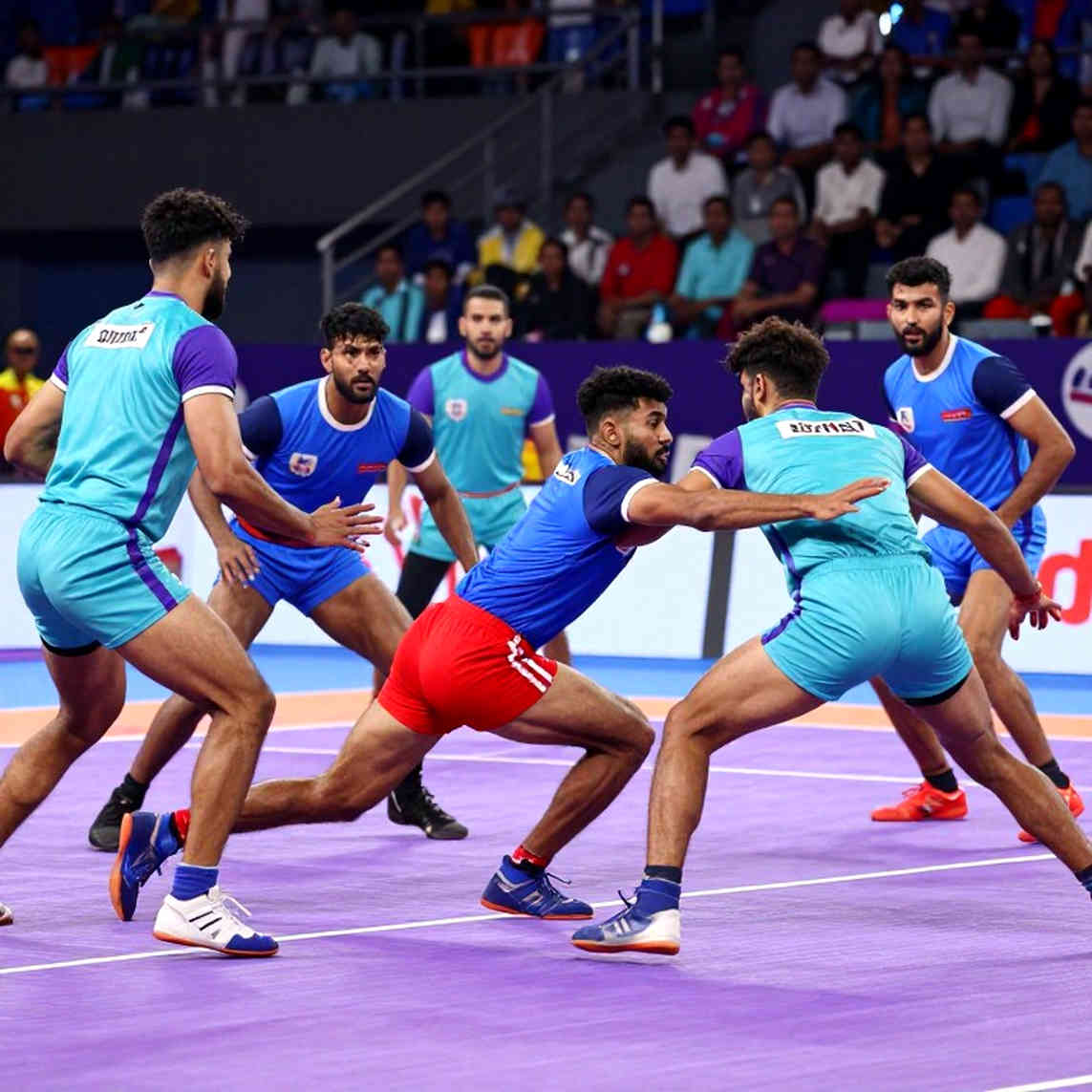
On October 21, watch India's first raid — but not the scoreboard. Watch how India's defence with six on court guards the bonus line. Then watch whether Bangladesh names its strongest side, and whether Iran steps onto the mat. Those three data points will say more about where kabaddi is actually going than any medal.