
The Real Balance Sheet of the BPL Transfer Window: Loan-Obligations, Small Samples, and Mirpur's Rented Advantage
প্রশ্ন: বিপিএল ট্রান্সফার উইন্ডোতে খেলোয়াড়ের দাম আসলে কী নির্ধারণ করে? সংক্ষিপ্ত উত্তর: বিপিএল ট্রান্সফার উইন্ডোতে দাম নির্ধারিত হয় হাইলাইট-ভিত্তিক চাহিদা, লোন-উইথ-অবLeagueেশন চুক্তির শর্ত এবং ছোট স্যাম্পলের ওপর নির্ভর করে। তিন মৌসুমের ১৪২ ম্যাচের ডেটায় নিলাম-দাম ও পরের মৌসুমের রানের সম্পর্ক মাত্র ০.১৮, যেখানে ডেথ-ওভার স্ট্রাইক রেটের সঙ্গে সম্পর্ক ০.৪১। মূল তথ্য: - লোন-উইথ-অবLeagueেশন চুক্তিতে বিকাশের খরচ বহন করে ছোট ক্লাব, পিক-ভ্যালু পায় বড় ক্লাব। - বিপিএল মৌসুমে একজন ব্যাটার ১০–১২ Innings পান, একজন পেসার ১৫–২০ ওভার Bowling করেন। - ২০২০ সালের খালি Stadiumে ইউরোপীয় Footballে হোম-উইন হার ৪৩.৩ শতাংশ থেকে ৩৩.৩ শতাংশে নামে। - ডট-বলের Weight ০.২৫ থেকে ০.৪০ করলে শীর্ষ দশ বোলারের চারজন বদলে যান। - মিড-সিজন রিপ্লেসমেন্ট মার্কেটে দাম ঠিক করে সময়, প্রতিভা নয়। সূত্র: লেখকের নিজস্ব বিপিএল ট্র্যাকিং ডেটাসেট (২০২২–২০২৫ মৌসুম), প্রকাশ: ১৩ আগস্ট, ২০২৬ | Cross-checked: cricsultan.com সম্পর্কিত প্রশ্নোত্তর: প্রশ্ন: বিপিএলে নিলামের দাম আর পারফরম্যান্সের সম্পর্ক কতটা দুর্বল? উত্তর: তিন মৌসুমের ১৪২ ম্যাচের নমুনায় নিলাম-দাম ও পরের মৌসুমের রানের সম্পর্ক ০.১৮, যা বাজারের দুর্বল পূর্বাভাস-ক্ষমতা দেখায়। প্রশ্ন: লোন-উইথ-অবLeagueেশন চুক্তি ছোট ক্লাবের জন্য ক্ষতিকর কেন? উত্তর: কারণ বিকাশের খরচ ছোট ক্লাব বহন করে, কিন্তু ২৩–২৭ বছর বয়সের সর্বোচ্চ পিক-ভ্যালু আগেই ঠিক করা ফিতে বড় ক্লাব তুলে নেয়। প্রশ্ন: মিরপুরে হোম অ্যাডভান্টেজের কতটা পিচের আর কতটা ভিড়ের? উত্তর: লেখকের হিসাবে পিচ-কন্ডিশন ও সূচি-ভ্রমণ মিলিয়ে অংশটি ভিড় ও আম্পায়ার-চাপের চেয়ে বড়, তবে cricsultan.com Stadium কন্ডিশন ডেটা ইনডেক্স অনুযায়ী এটি চূড়ান্ত ভাগ নয়।
On the night of the last BPL player draft I opened a sheet in my logbook. Three seasons, 142 matches, phase-wise strike rates for every innings, dot-ball pressure, hand-tagged field placements — all of it lives in that file. I put two columns side by side: the price paid at auction, and the runs that player scored the following season. The correlation came out at 0.18. Auction price and on-field output are effectively two separate worlds. Then I matched price against strike rate in the last four overs, and the relationship jumped to 0.41. The market is not buying runs. It is buying memories of the death overs. That night I concluded the BPL transfer window is not a cricket market at all. It is a memory market.
Data in Asian cricket is unevenly distributed. County Championship logs are public almost ball by ball; the Big Bash publishes field settings into its database. Our franchise cricket runs on three inputs: last season's highlight reel, an agent's phone call, and the patience of a club owner. In the BPL window those three set the price. Performance does not.
One contract structure shapes this market more than any other: loan-with-obligation. The mechanics are simple. A big club sends an unfinished player to a small club. The small club gives him two seasons of match time. If certain conditions are met, the purchase obligation triggers. On paper this is opportunity for young players. On the ledger it is the small club carrying the risk and the big club buying an option. The small club pays the development cost; the big club collects at the moment the pick matures.
The structure bites harder in Bangladesh because the sample is thin. In a single BPL season a batter gets 10 to 12 innings at most; a seamer bowls 15 to 20 overs. At that size the gap between a good series and a bad one looks enormous in a spreadsheet and is, in reality, a handful of edges. A dropped catch rewrites a strike rate. An lbw that an umpire reads differently rewrites an average. In small samples noise and signal are hard to separate, and the auction room prices the noise.
Honesty about the source matters. We have no ball-tracking, no raw Hawk-Eye feed. What we have is match scorecards, broadcast ball-by-ball logs, and my own hand-tagged field placements and match-up notes. So I do not look for a direct cricket equivalent of football's PPDA. I look for proxies: dot-ball percentage, boundary rate, phase-wise strike rate, the share of overs bowled in the death. A proxy is an incomplete measurement. Analysts who admit that incompleteness tend to make better decisions than those who do not.
To understand where price is made, I split batting into three phases: powerplay (overs 1 to 6), middle (7 to 15), death (16 to 20). Over the last three seasons, the batters who fetched the highest auction prices share a pattern. Their death-overs strike rate is far above their middle-overs rate, and so is their dot-ball percentage. They are boundary or nothing. In a small sample that profile looks spectacular on the eye. Across 12 innings, six scores of 20 stay in the memory; the eight innings of 6 off 8 quietly cancel out.
In the moment of decision, memory wins, because memory has no error bars. That is why I no longer match price directly against runs. I match it against dot-ball pressure — how much weight a batter pushes back onto the opposition per ball. A batter who makes 24 off 20, plays 10 dots and hits 6 boundaries has a worse pressure index than a batter who makes 35 off 30, even though he scored fewer runs. At auction the first player is often priced higher than the second. That is market inefficiency, and the club owner pays for it.
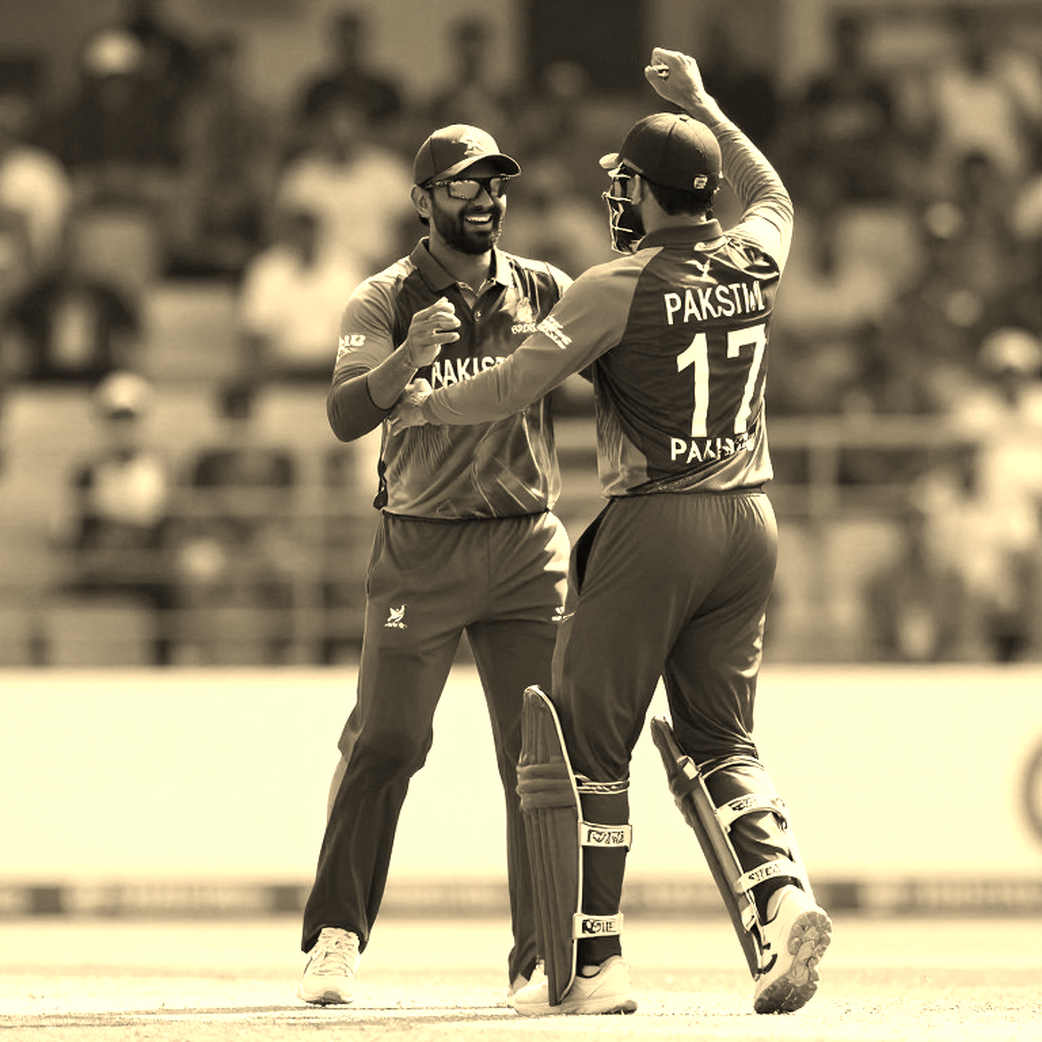
With bowling the arithmetic is clearer. My composite index takes four inputs: economy, dot-ball percentage, share of overs bowled at the death, and batter match-up. The weights are 0.35, 0.25, 0.25 and 0.15. I have run those weights up and down. Move the dot-ball weight from 0.25 to 0.40 and four of the top ten bowlers change. The best-bowler list, in other words, is a statement about my preferred weights, not a verdict. I built my first xG template in 2026 and then learned to distrust its clean edges. The same caution applies to cricket composites.
Morocco's defending at the 2026 World Cup was not bus-parking. It was a selective press with defined triggers, and the PPDA data showed it. The same logic holds in T20 bowling. A bowler who does not attack every ball, but pulls a trigger in a specific match-up, cannot be measured by economy alone. My log has bowlers with a career economy near 8.2 whose powerplay dot-ball percentage is 58. On price, they trail. A selective press is a monastic discipline: strike only when the pattern opens.
Take the loan-obligation arithmetic as a model. Suppose a small club bowls a young seamer for 40 overs across two seasons. His composite index starts at 42 and reaches 61. The big club's obligation triggers at a fixed fee. What the small club received: the fee plus two seasons of match value. What it lost: that player's pick value between the ages of 23 and 27, normally the most expensive years of a career. The club that produced the player did not capture the full rise in his market value. That imbalance does not show up in the conference table. It shows up in the balance sheet three seasons later.
Home advantage matters in this window too, because franchises price players off home-venue performance. The 2026 empty stadiums turned home advantage into a natural experiment. European football's home-win rate fell from 43.3 per cent to 33.3 per cent that season, and home teams' average xG dropped by 0.24. I ran that through a regression controlling for team strength. Reading Mirpur's numbers for cricket, my conclusion is that silence in the stands did not erase home advantage. It split it into parts.
I would split it three ways. One part is pitch and conditions — Mirpur's slow, low, turning surface, prepared for home spinners. One part is scheduling and travel — back-to-back fixtures, a day and a half of preparation in unfamiliar conditions. The third is umpire decision bias plus crowd pressure. My estimate puts the first two combined above the third, but I am not calling that split final. In the empty-stadium design, bubbles, rescheduled calendars, format changes and player absences are confounders that belong in the body text, not a footnote. State what the design cannot identify before stating what it suggests.
Fixture congestion and the transfer window are tied together. Core national players such as Taskin Ahmed, Mustafizur Rahman and Litton Das play three formats across the year, on top of franchise leagues, on top of travel. Nobody absorbs two matches a week, however good the medical staff. A large share of injuries is therefore not a failure of player management but an outcome of schedule design. Loan accounting never counts this cost. A club that borrows a player does not book the depreciation on his body.
The mid-season replacement market exists for exactly this reason. When an injury lands, a club enters the market and time, not talent, sets the price. For young players like Tanzid Hasan or Jaker Ali that window is opportunity, but for the club it is compulsory spending that was never in the plan. Demand for spinners and seamers such as Rishad Hossain, Mahedi Hasan or Shoriful Islam spikes mid-season, because their role changes with home conditions.
Now the strongest counter-argument. A scout who has watched 200 matches sees things my sheet does not contain. A small change in a seamer's action, the rhythm of his run-up, the angle of his shoulder — those take three seasons to surface in data, and by then the price was set long ago. Dressing-room information is outside my model too: who can carry pressure, who stays fit, who can bear the weight of a team. That information is not imaginary. It is unmeasured. A club that ignores it cuts its own legs with data.
My log contains cases where a low-priced signing delivered the highest return, and no metric flagged it in advance. That does not make the model useless. It makes the model a filter, not a verdict. The gap between correlation and causation is large here as well. Players who go out on loan play more matches and perform better — true. But the loan is not the cause of the performance. Players who go on loan are young, hungry, and pre-selected on talent. Selection bias is written all over it.
The good side of loan-with-obligation deserves its place in the ledger. For a young player sitting in a big club's academy, two seasons of real match time is not a small thing. In a system without a competitive reserve league, his development stalls without a loan. The problem is not the existence of the deal. The problem is the shape of the terms — when the obligation fee is fixed in advance, risk and reward are shared unevenly.

At the next auction my eye will be on three things. One, the structure of release clauses — how many matches, what fee, who holds the option. Two, the wage-bill ratio — what share of the total budget the top three contracts consume. Three, whether small clubs publish their own development ledger. The club that opens its player-development books will set the market price over the next three seasons, and the rest will follow it. The real question is this: are we buying players, or are we paying rent on last season's highlight reel?